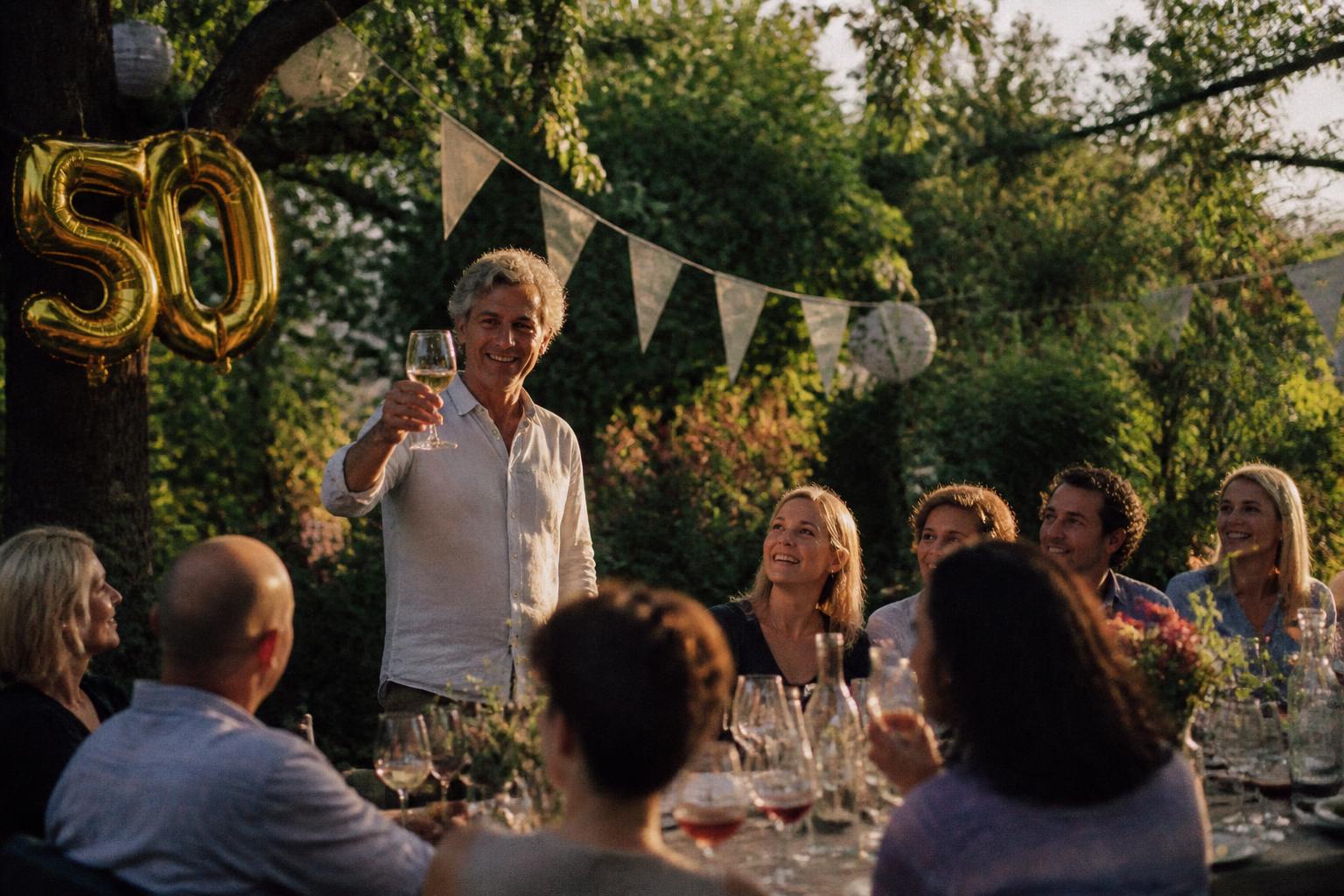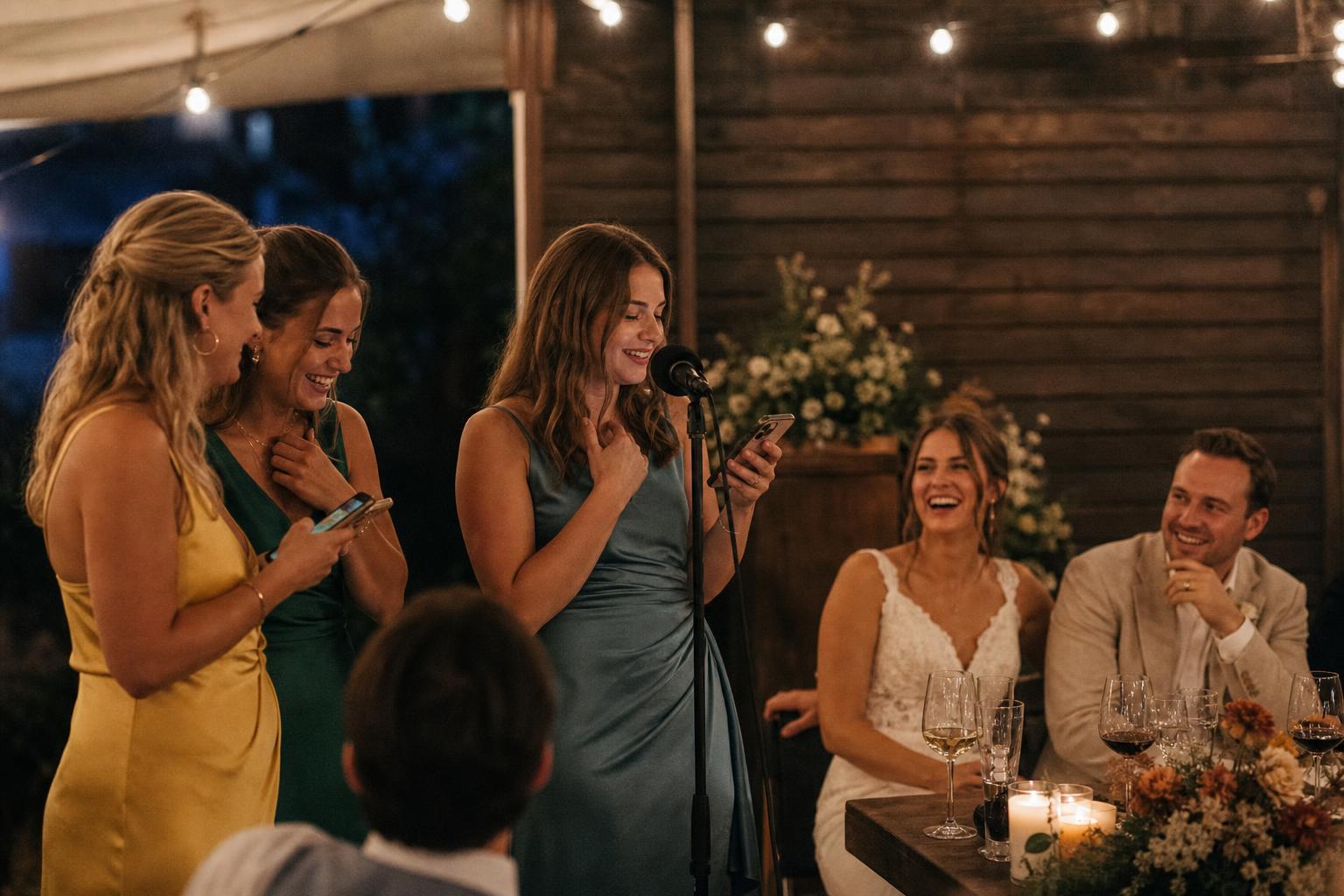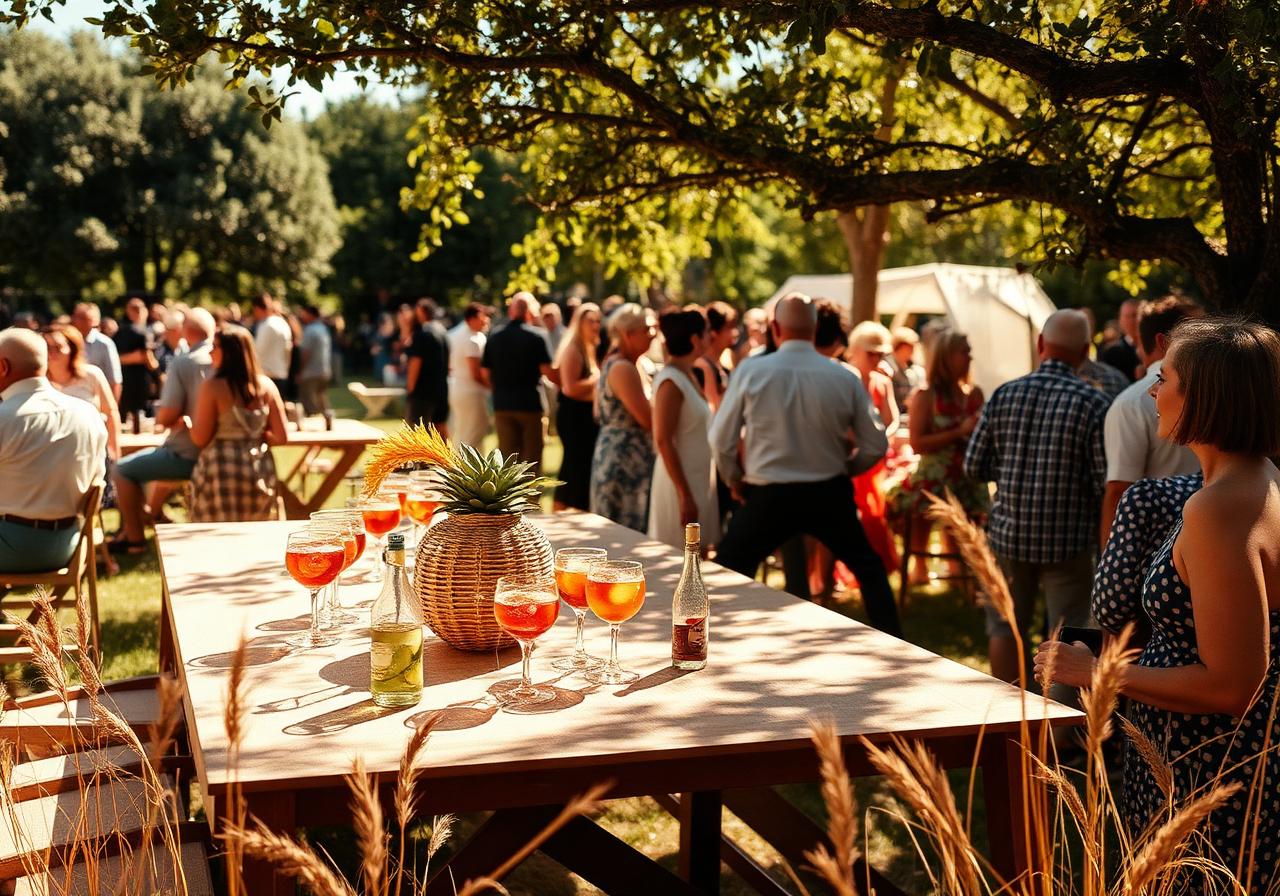
There's something curious about summer receptions above twenty-five degrees. Everyone is in a great mood, the snacks taste better, the light is gorgeous. And yet far fewer photos come in afterwards than at a regular autumn wedding. Why is that, and what can you do about it?
Why summer receptions are different
Guests spread out. Half of them disappear under a tree, the other half claim the bar. Nobody wants to move, so the natural flow between groups breaks down. Photos get taken mainly within clusters that already sit together, and those tend to be the same people.
On top of that, phones are warm in jacket pockets on chairs, screens are unreadable in bright sun, and the evening only really starts after sunset. By the time the ritual of taking photos kicks in, half the day is already gone.
The WhatsApp problem at thirty degrees
Starting a group chat sounds great in theory. In practice the screen is too bright to read, batteries drain faster than usual (heat eats batteries), and nobody feels like scrolling through a hundred messages on a day too hot to think.
Five practical tips
- 1.Place one central collection point clearly visible at the bar and the drinks station. Those are the two spots everyone walks past, even in the heat. A QR code on a small sign is enough.
- 2.Send a reminder around sunset. Golden hour is when everyone suddenly wants to take photos. A short announcement from the DJ or a note on the buffet works wonders.
- 3.Set up a separate spot for videos of the first dance or the speeches. Videos are heavier, guests are less likely to share them afterwards. A clear ask in the moment beats a general request.
- 4.Provide shade and a charging corner near the collection point. Sounds small, but a guest with an empty battery is a guest with no shared photos. An extension cord and a few cables can save your afternoon.
- 5.Include the upload link in your save-the-date or programme booklet. Whoever knows how it works in advance doesn't have to figure it out on the day. Older guests especially appreciate the heads-up.
Read also: collecting photos from your wedding guests.
What to do with the harvest afterwards
Don't wait too long. The three days after the reception are when most photos come in, because guests are reviewing their own shots. Download everything in one go after a week, sort them roughly by moment of the day, and send a small thank-you to whoever contributed a lot. That's also your excuse to share the best ones.
Short comparison: disposable cameras in the heat vs. digital
Disposable cameras survive thirty degrees, but don't necessarily survive the day (they vanish, or end up in a bag that never resurfaces). The photos are fun, rarely usable, and you only find out weeks later what's on them. Lovely for atmosphere, less so for the actual collection.
Collecting digitally takes a bit more preparation but delivers images in original quality, available the same evening. The combination of both works best, as so often in this story.
To finish
A hot day isn't a problem for your photos, as long as you don't hope it all happens by itself. Make it easy for your guests, give them one clear collection point, and let them know their contribution matters. The summer does the rest.

Try Partylio for free
Create an event, generate your QR code and receive photos from all your guests. No app required.