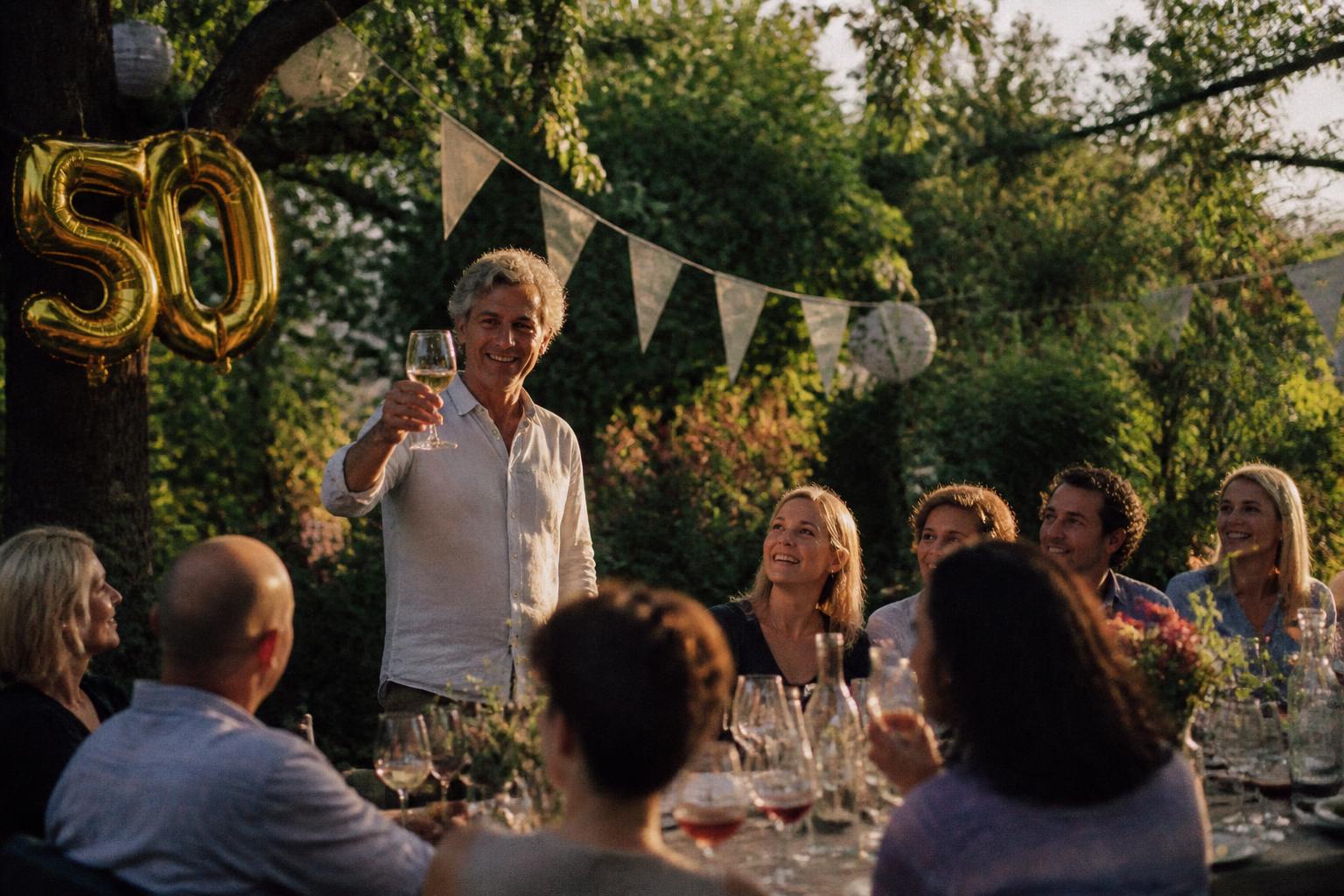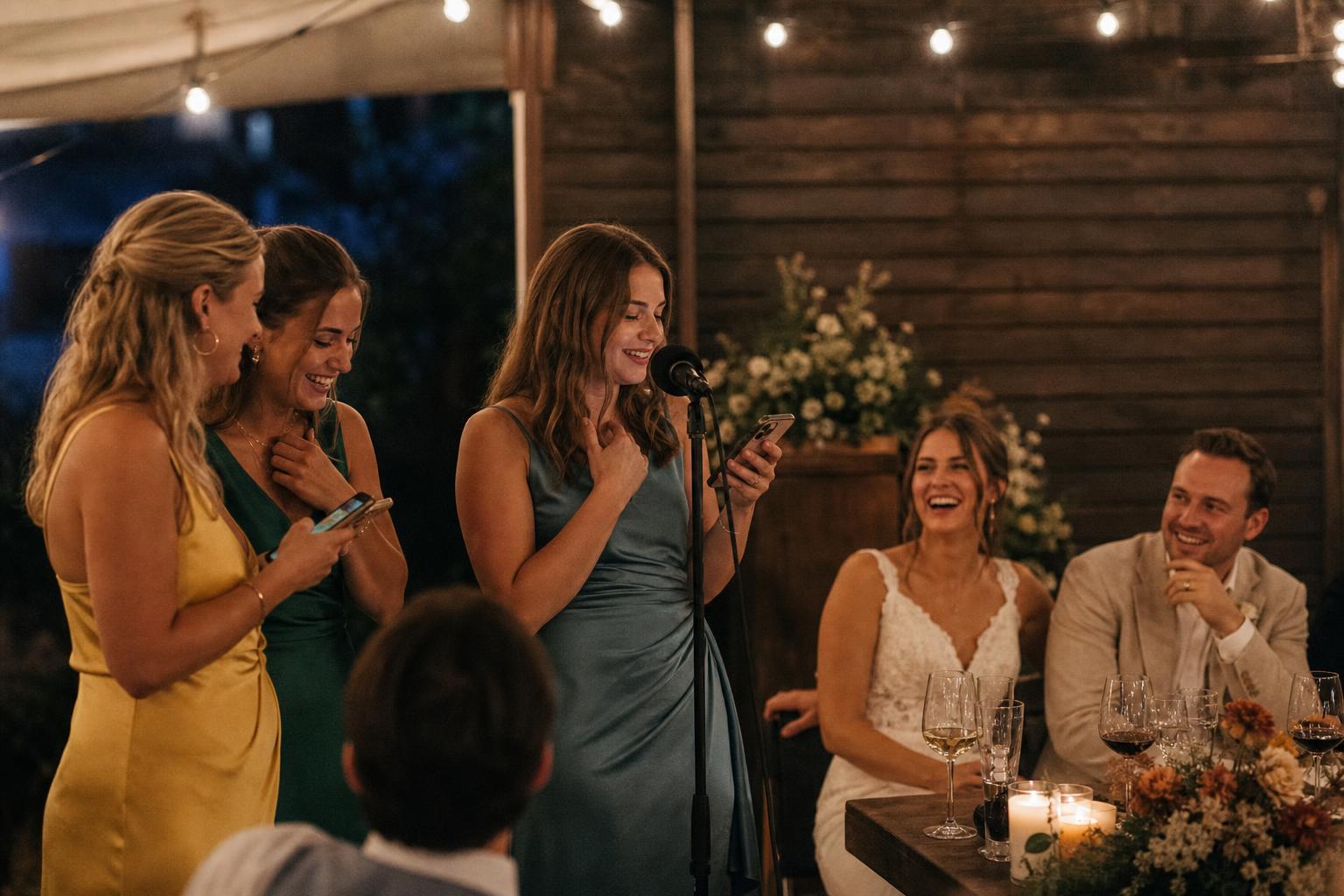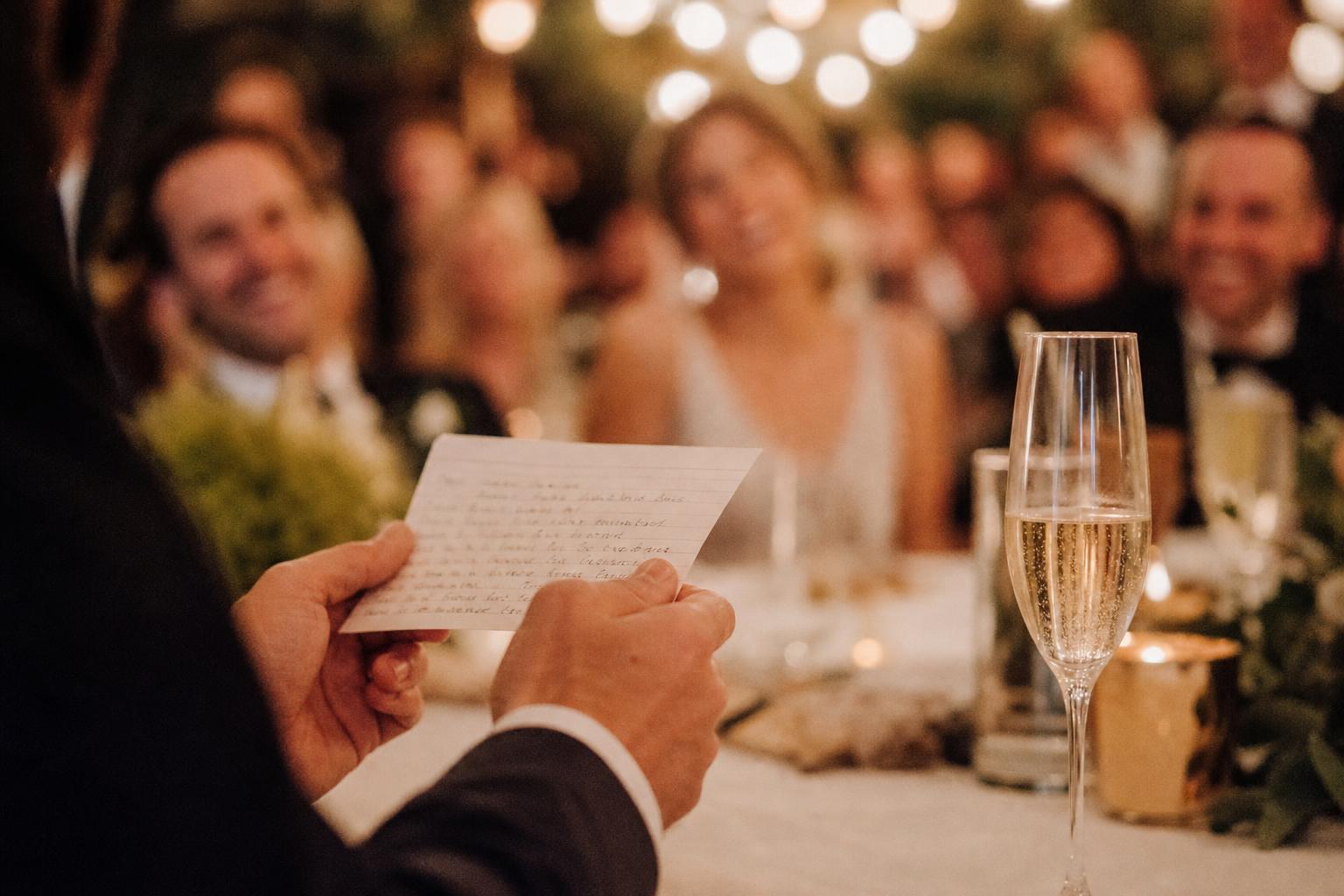
There's one moment at every wedding when everyone stops eating: when someone stands up with a piece of paper in their hand. The best speeches get forwarded years later on WhatsApp with the line "remember this". The worst ones linger too, but for the wrong reasons. Below: what a good wedding speech actually does today, how long it should be, and a structure that always works, even if you've never done this before.
What a good speech actually does
A wedding speech isn't a life summary. It's a small gift in words, aimed at the couple and at everyone in the room at the same time. A good speech does three things at once: it makes the couple feel seen, it lets guests who don't know them well discover something new, and it ends with a moment where everyone can raise a glass together. Longer doesn't equal better. If anything, the opposite.
The right length
Three to five minutes. Full stop. Whatever you're thinking, longer is almost never better. Five minutes is already a lot when you're well prepared. Seven minutes feels like ten. Ten minutes feels like half an hour. Time it out loud with a timer before you rehearse, not in your head. Reading in your head is faster than reading aloud, so plan for about 130 words per minute. That means 400 to 650 words on paper. More than one single-sided page is a warning sign.
With multiple speeches on the same night: agree with the MC that the total speech block runs 25 minutes max, spread across three or four speakers. Beyond that, guests start checking their phones.
A structure that always works
Most good wedding speeches follow roughly the same rhythm. Four short blocks:
- 1.Opening: one or two lines that grab attention immediately, not "uh, is this mic on".
- 2.Anecdote: one concrete story from your shared history, with detail and imagery.
- 3.Turn to the couple: what does that story say about who they are, together or alone.
- 4.Toast: one final line, glass up, everyone joins.
Nothing more needed. A speech with these four parts, each 60 to 90 seconds, is short, warm and lands. If you want to say more, don't add extra blocks. Make the anecdote a little richer instead.
5 openings that work
The first 30 seconds decide whether the room listens or drifts. Avoid "I'll try to keep this short" or "I'm not really a speaker". What does work:
- 1.The concrete memory: "On a Tuesday evening in March 2018, Lotte called me at 11:34 pm. She had a problem, and that problem was called Thomas." Instant image, instant attention.
- 2.The observation: "I've never heard Thomas say he was sure about anything. Today is the first time." Short, warm, leaves room for laughter.
- 3.The question: "Who here has ever heard Lotte say she wasn't going to get married?" Every hand goes up. "Today we have proof that people can change."
- 4.The contrast: "Today I'll talk about the calmest person I know. And about Thomas." Works especially when personalities really differ.
- 5.The direct dedication: "This speech isn't for Lotte and Thomas. They already know everything. This is for everyone who still wonders how they ended up together."
4 pitfalls that break a speech
- 1.Inside jokes with no context. When only five people laugh, the rest sit awkwardly. Every joke needs to work for someone who's known the couple less than a year.
- 2.Alcohol as backup. Two glasses before the speech makes you looser, three makes you fuzzy. Wait until after your part.
- 3.Lists of qualities. "He's funny, kind, smart, reliable and a great friend." Sounds like a LinkedIn recommendation. Tell one story that shows those things instead.
- 4.Reading without eye contact. You don't need to speak from memory, but look up at the end of each sentence. Cue cards work better than an A4 sheet because your hand shakes less.
Rehearsing and timing
Rehearse three times, out loud. Once alone, to hear how it flows. Once for someone who knows the couple well, to check the facts. And once for someone who doesn't know them, to hear if it still works without context. Each pass you cut a little more. Nearly every first draft is too long, and nearly every final version is better than the original.
One thing you'll want later: how did your speech actually land in the room? The reactions, the laughter, the tear from the bride's mother, you don't see any of it because you're facing forward. In a shared guest feed exactly the moments a photographer misses usually do come in, and you only get a good view of how it landed about a week later. Don't be surprised if you like yourself better on video than you thought in the moment.
The best speech we ever heard lasted two minutes. The speaker told one small story about how his sister never did anything for nothing, except for someone she truly loved. He said he saw that someone sitting here today. Glass up. Everyone at the table, quietly teary. Two minutes was enough.

Try Partylio for free
Create an event, generate your QR code and receive photos from all your guests. No app required.