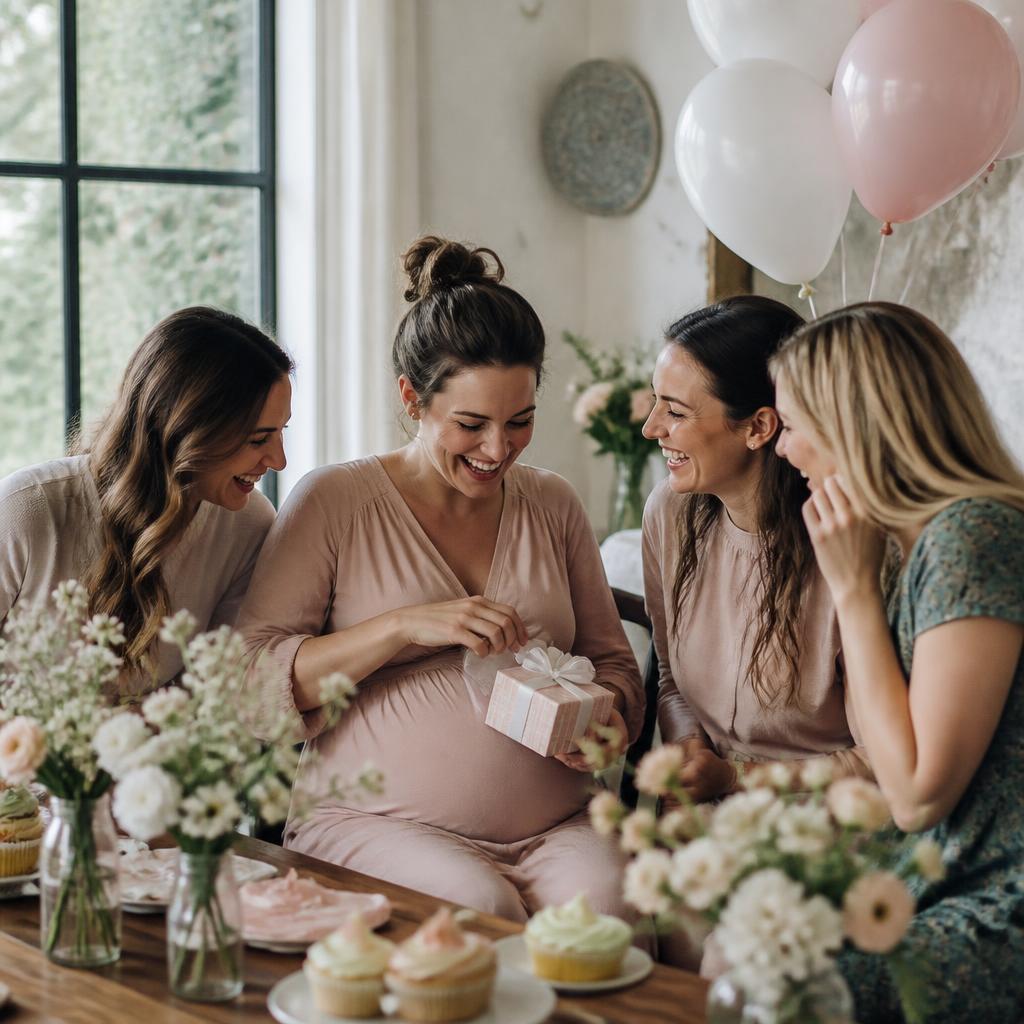
The baby shower has slowly settled into European celebrations, but the practical side still causes confusion. When exactly do you plan it? Who takes the lead? And what if the baby comes earlier than expected? Below is a practical overview based on what we saw work at hundreds of baby showers.
What is a baby shower, really?
A baby shower is a small party for the expecting mother, usually organised by her closest friends, sister or mother. The name comes from the United States, where the mum is literally 'showered' with little gifts for the baby. In Europe the tone is a bit looser: less gift-focused, more about being together. An afternoon with friends, food, some games and lots of photos. Usually three to four hours, with a group of ten to twenty people.
When is the ideal moment?
The sweet spot lies between week 28 and week 34 of the pregnancy. At that point you're visibly pregnant, still feel well enough to handle half a day, and aren't yet in the final uncomfortable weeks. Earlier than week 28 often feels too early for guests. Later than week 34 and you risk the baby arriving in between.
Week by week: where's the difference?
- Week 24 to 28: possible but often feels early. Only if there are practical reasons like expected early delivery or family travel planning
- Week 28 to 32: ideal for most pregnancies. Enough energy, clear bump, time to enjoy without rush
- Week 32 to 34: still fine, mum feels the tiredness a bit more. Keep the afternoon shorter
- Week 34 to 37: only if you're sure the baby won't come early, and keep it short and close to home
- From week 37: too late, it can happen any moment
Who traditionally organises the baby shower?
In the classic setup, the expecting mother never organises her own baby shower. That would be seen as asking for gifts, which is culturally sensitive. In practice it happens more and more, simply because friends are busy and the mum knows best what she wants.
The most common organisers:
- Best friend or maid of honor: classic choice, usually in consultation with the mum
- Sister or sister-in-law: works well when there's a close bond
- Mother or mother-in-law: can be lovely, but mind the generational difference in style
- Mum herself, with help from one or two friends: more practical, less surprise but usually exactly as she wants it
Our advice: always agree on date, venue and guest list with the mum in advance. The surprise is in the decoration, theme and small details, not in the fact that a baby shower is happening. That way you avoid it landing on the wrong week or inviting the wrong people.
How early do you invite guests?
Count on three to four weeks in advance for a baby shower in your local circle. Family or friends coming from further afield: warn them six weeks ahead, even before the formal invitation goes out.
Digital invitations are the norm now. A nice image via WhatsApp or a Canva-style tool is enough. For grandmothers or aunts who don't use smartphones: a small printed card is a lovely touch.
Season and practical factors
Summer (May to September)
Ideal for a garden party. More space, less noise, beautiful photos with natural light. Downside: during a heatwave it's exhausting for a heavily pregnant woman. Provide plenty of shade, fans and cold drinks. Plan the party before the heat peaks, usually between 11am and 3pm.
Winter (October to April)
Indoors at someone's home works best. Make sure it's warm enough, since pregnant women swing between overheating and cold feet. Afternoon with tea, warm snacks and soft lighting makes it cosy. Count on three hours max, after that energy runs out.
Travel distance for guests
Keep it small and close by. Family or friends travelling more than an hour for a three-hour afternoon feels disproportionate. If you want a bigger group, split into two smaller parties: one with friends, one with family.
What if the baby comes early?
In about 10 percent of pregnancies the baby arrives earlier than expected. A few practical tips to cover yourself:
- Don't plan the baby shower later than week 34 if it's your first baby
- For twin pregnancies: plan between week 26 and 30
- Make sure the key guests can be flexible if the date needs to move up
- Consider a 'sip and see' as an alternative: a small party a few weeks after birth where everyone comes to see the baby. Works especially well if the baby shower itself is no longer feasible
Collecting photos and memories
A baby shower is a day you'll want to look back on later, especially when you're in the middle of the first months with a newborn. But in practice the same thing happens as at every family gathering: everyone takes photos, but the mum only sees a handful afterwards. Two photos in the group chat, a story clip from someone, and the rest disappears into the phones of friends you'll never track down again.
What we often saw work at baby showers: place a small card with a QR code at the entrance or on the table. Guests scan it once with their phone and can upload their photos and videos without app or account. You get back the day as you didn't see it: the friend quietly filming while you unwrap a gift, your mother watching you with her hand over her mouth, the aunt laughing with friends behind you.
A platform like Partylio collects everything automatically in one album. Download it after the party as a ZIP, so you can browse it later at your leisure, including in the weeks after birth. Ideal for making a small photo book for the nursery afterwards, or just to look back on a moment you were in the middle of. Cost for a small event like a baby shower: from €19.95, or free to try during the trial.
Frequently asked questions
What's the ideal week for a baby shower?
Week 28 to 34 works for most pregnancies. Earlier feels too early for guests, later you risk the baby coming in between. For twins, plan a few weeks earlier, between week 26 and 30.
Can you organise your own baby shower?
Yes, that's fully accepted now. Traditionally friends or family did it, but in practice mums increasingly organise their own, often with help. What matters is that the party feels the way you want it, not the way tradition says.
How many guests do you invite?
Ten to twenty people works best for most baby showers. Small enough to actually talk to everyone, large enough for nice group moments. More than thirty guests often feels overwhelming for a heavily pregnant woman.
Who pays for the baby shower?
Usually the organiser, with contributions from the other friends involved. In some families the mum's mother covers the cost. For a small party at home, budget 100 to 300 euros total, including snacks, drinks and decoration.
Read also: capturing baby shower memories.

Try Partylio for free
Create an event, generate your QR code and receive photos from all your guests. No app required.